China's Youth Are Trading Boba for Foot Rubs—And It's a Whole Lifestyle Now
Something strange is happening across China's urban landscape, and it has nothing to do with AI models or robot dogs. Young Chinese professionals are pouring their disposable income into foot massage parlors (足疗店) with the same manic energy once reserved for排队 buying限量 bubble tea at Heytea (喜茶).

The Toutiao (今日头条) headline burning up the algorithm right now—「年轻人上瘾按摩足疗:比喝奶茶更疯狂」—translates roughly to "Young People Are Addicted to Foot Massages: Crazier Than Drinking Milk Tea." With nearly 3 million engagements, this isn't niche content. This is mainstream China saying: the foot rub is the new boba.
Let's contextualize this properly. China's foot massage industry is estimated to be worth over 500 billion RMB annually—yes, half a trillion yuan for people getting their soles kneaded. That's bigger than the domestic box office. Bigger than a lot of industries you'd assume were more "important." And the demographic shift is real: where once these establishments catered to middle-aged businessmen seeking post-banquet relaxation (and sometimes extracurricular services), the new generation of chains like Liangzi (良子) and Guizi Jun (贵足君) have rebranded as wellness sanctuaries with Instagrammable interiors, craft tea service, and aesthetician-grade foot scrubs.
The economics are compelling for a generation squeezed by 996 work culture and shrinking corporate perks. A 90-minute session at a mid-tier foot spa in Shanghai runs roughly 150-300 RMB—comparable to a fancy dinner, cheaper than therapy, and infinitely more immediately gratifying than saving for an apartment you'll never afford anyway. On Xiaohongshu (小红书), foot massage reviews have become their own content genre, with influencers ranking parlors by ambience, technique, and whether the complimentary snacks include imported nuts.
Yes, complimentary snacks. The modern Chinese foot massage parlor has morphed into a hospitality hybrid: part spa, part café, part co-working lounge where you can take a Zoom call while someone digs their elbow into your arch. Some chains now offer unlimited fruit plates, WiFi speeds that rival co-working spaces, and memberships with loyalty points that would make airlines jealous.
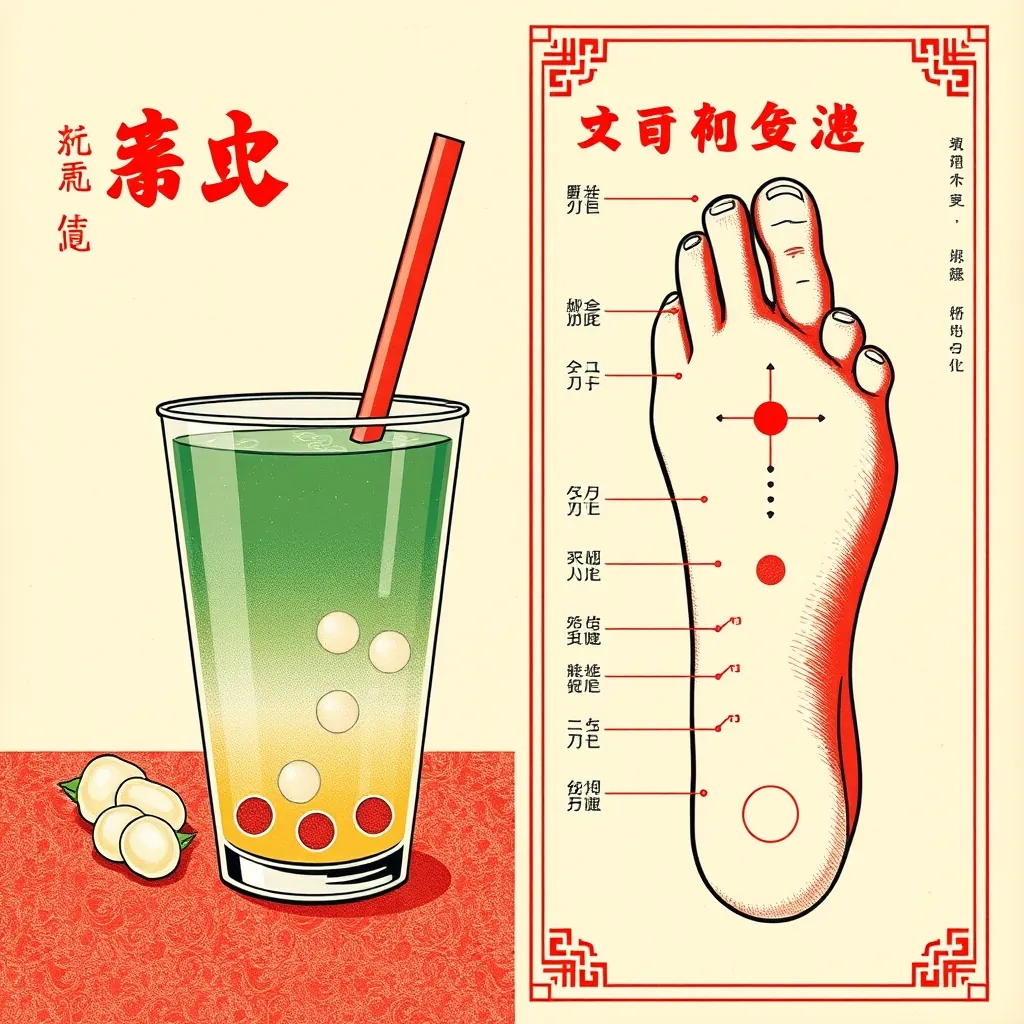
What we're witnessing is the commodification of self-care for a demographic that desperately needs it but can't access traditional mental health services due to stigma and cost. The foot massage becomes a socially acceptable, culturally legible form of therapy. Your parents might worry if you announce you're seeing a psychologist; nobody blinks if you book a 120-minute reflexology session twice a week.
The trend also reflects a broader shift in China's consumer landscape: the rise of "affordable luxury" services that feel premium without breaking the bank. This generation watched their parents spend on status goods—handbags, cars, apartments—and decided to spend on experiences instead. A foot massage is experiential, immediately rewarding, and comes with zero commitment. It's the perfect consumer product for a generation terrified of long-term obligations.
Douyin (抖音) has amplified this dramatically. Foot massage ASMR content—satisfing crack sounds, steamed herbal compresses, satisfying callus removal—generates millions of views. Search "足疗" on Douyin and you'll find parlor tours, technique comparisons, and dramatic before/after foot transformations that are oddly mesmerizing. Creators have built entire channels around reviewing foot spas, and the comments sections reveal genuine communities of enthusiasts sharing tips like sommeliers discussing terroir.
The industry has responded with tech-enabled innovation befitting the age. Major chains now use mini-programs on WeChat (微信) for booking, track customer preferences in CRM systems, and deploy AI-scheduling to optimize therapist shifts. Some upscale parlors have experimented with AI-assisted pressure mapping—sensors that analyze your foot posture and recommend customized treatment protocols. It's not quite DeepSeek-level AI, but the digitization of traditional wellness is very much underway.
There's also a fascinating urban-rural dynamic at play. Foot massage chains are expanding aggressively into tier-3 and tier-4 cities, where consumer spending power is rising but entertainment options remain limited. In county-tier markets (县域), the local foot spa has become the de facto third place—neither home nor work, but a social hub where friends gather, deals get done, and single professionals mingle. It's Cheers, but everyone's barefoot and the bartender has strong thumbs.
The milk tea comparison in the original headline is telling. China's milk tea obsession—epitomized by brands like Mixue (蜜雪冰城), Chagee (霸王茶姬), and Nayuki (奈雪的茶)—defined Gen Z consumption patterns for half a decade. But milk tea is portable, quick, ultimately just a beverage. Foot massage is immersive, time-intensive, and creates genuine physical dependency. Once your body adapts to weekly deep-tissue foot work, skipping it feels genuinely uncomfortable. Practitioners talk about "addiction" with a mix of self-awareness and pride.
Industry watchers estimate the foot massage sector is growing at 15-20% annually in urban centers, with premium chains seeing even faster expansion. Investment capital has noticed. Several major chains have received funding rounds from consumer-focused PE firms betting that wellness spending will only accelerate as economic anxiety drives demand for affordable comfort.
The cultural implications run deeper than commerce. This is a generation renegotiating what “wellness” means in a Chinese context—not imported yoga studios or Western therapy models, but something rooted in Traditional Chinese Medicine principles of meridian points and energy flow, modernized with Instagram aesthetics and WeChat payments. It's old medicine repackaged for the algorithm age.
So yes, young China is addicted to foot massages. But what they're really addicted to is affordable relief from the pressures of modern Chinese life—and the foot spa industry has positioned itself perfectly to provide it, one heel dig at a time.